Summary
High-potency topical glucocorticoids represent the first-line therapeutic cornerstone in psoriasis vulgaris. However, prolonged and unsupervised use may lead to systemic absorption and suppression of the hypothalamic–pituitary–adrenal (HPA) axis, resulting in iatrogenic Cushing syndrome [1,2].
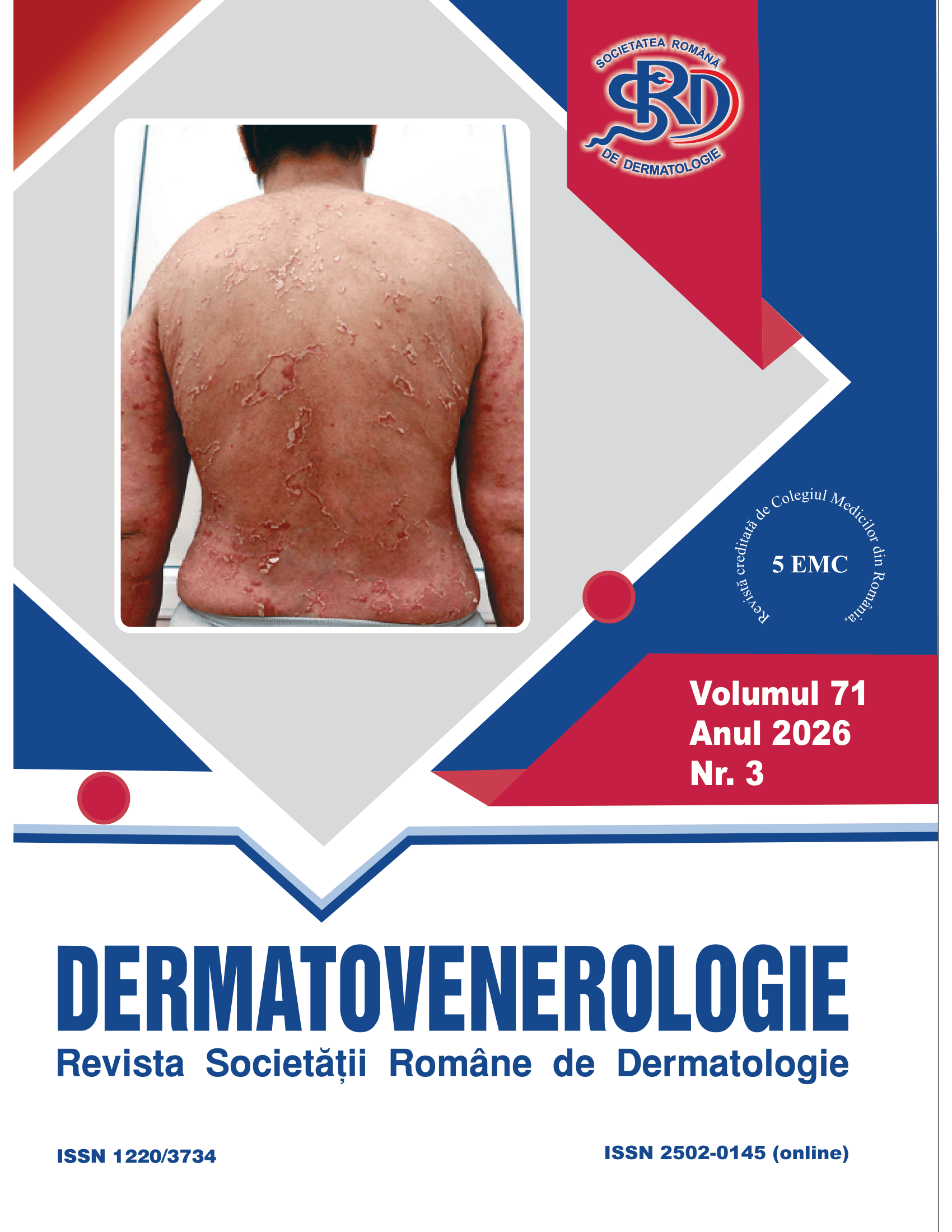
We present the case of a 40-year-old female patient with a 25-year history of psoriasis vulgaris, admitted for intense diffuse cutaneous erythema with a tendency toward erythroderma, extensive lamellar desquamation, and multiple erythematous-squamous plaques, developed on a background of marked skin atrophy. The patient had chronically used clobetasol propionate, applied topically twice daily over long periods, without medical recommendation or specialist monitoring. Clinical examination revealed cushingoid facies, severe scalp involvement, and significant nail changes. Paraclinical investigations showed an extremely low serum cortisol level (3.97 ng/ml) and osteopenia (DEXA score). Treatment was initiated with oral Prednisone (10 mg/day) to support the HPA axis, associated with systemic Methotrexate (15 mg/week subcutaneously), folic acid, and non-steroidal topical emollient therapy. Clinical and paraclinical evolution at 2 and 5 months was markedly favorable, with a significant reduction in severity indices (PASI from 37.1 to 19.8) and recovery of HPA axis function, with serum cortisol increasing to 105.2 µg/dL at two months.
This case highlights the dangers of self-medication with super-potent dermatocorticosteroids. Interdisciplinary collaboration and periodic medical monitoring are essential to prevent severe iatrogenic complications.