Summary
Bullous pemphigoid (BP) is the most commonly occurring autoimmune blistering disorder affecting the elderly. It is a multifactorial polygenic disease and the exact pathogeny is yet to be elucidated.
BP incidence and prevalence have increased in recent years, probably because of population ageing, the increased prevalence of diseases associated with BP, especially neurological, the more frequent use of certain medications that may induce BP, as well as to more accurate diagnosis.
Many drugs have been implicated in the induction of BP, most frequently gliptins, PD-1/PD-L1 inhibitors, loop diuretics and other cardiovascular medication, penicillin and derivatives.
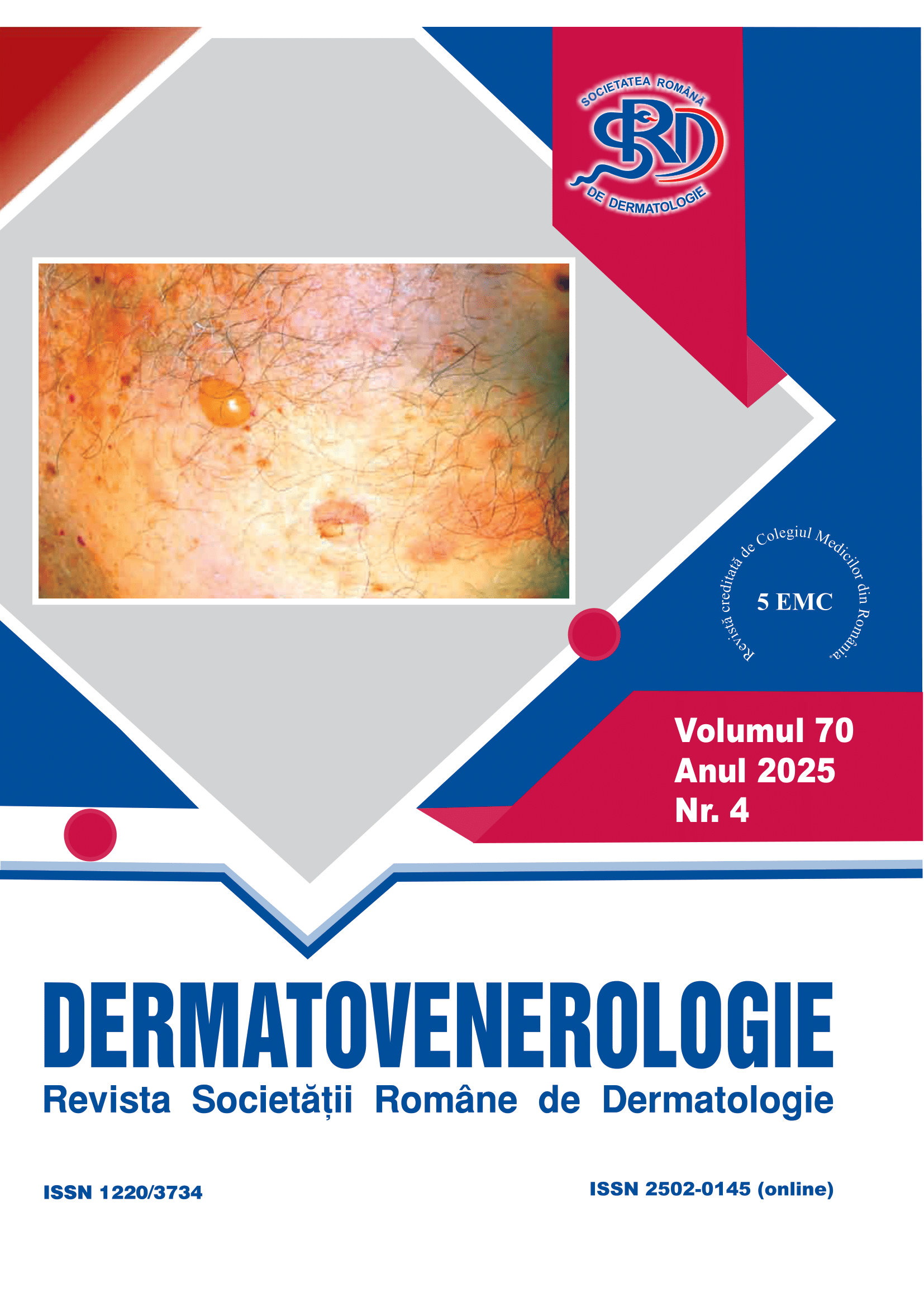
We hereby report the case of a 68-year-old patient who presented to our dermatology clinic for a highly pruritic generalized cutaneous eruption with erythematous plaques, tense bullae and erosions. The patient’s history was significant for type II diabetes mellitus and he was started on a combination of metformin and vildagliptin 5 months before.
The patient was diagnosed with DPP-4 inhibitor-induced BP and was started on systemic and topical corticosteroids, as well as doxycycline. Vildagliptin treat-ment was withdrawn. The patient has a good initial evolution under treatment, but was later lost to follow-up.